
Common Measurement and Administration Mistakes Involving Staying on 2.5 mg Zepbound
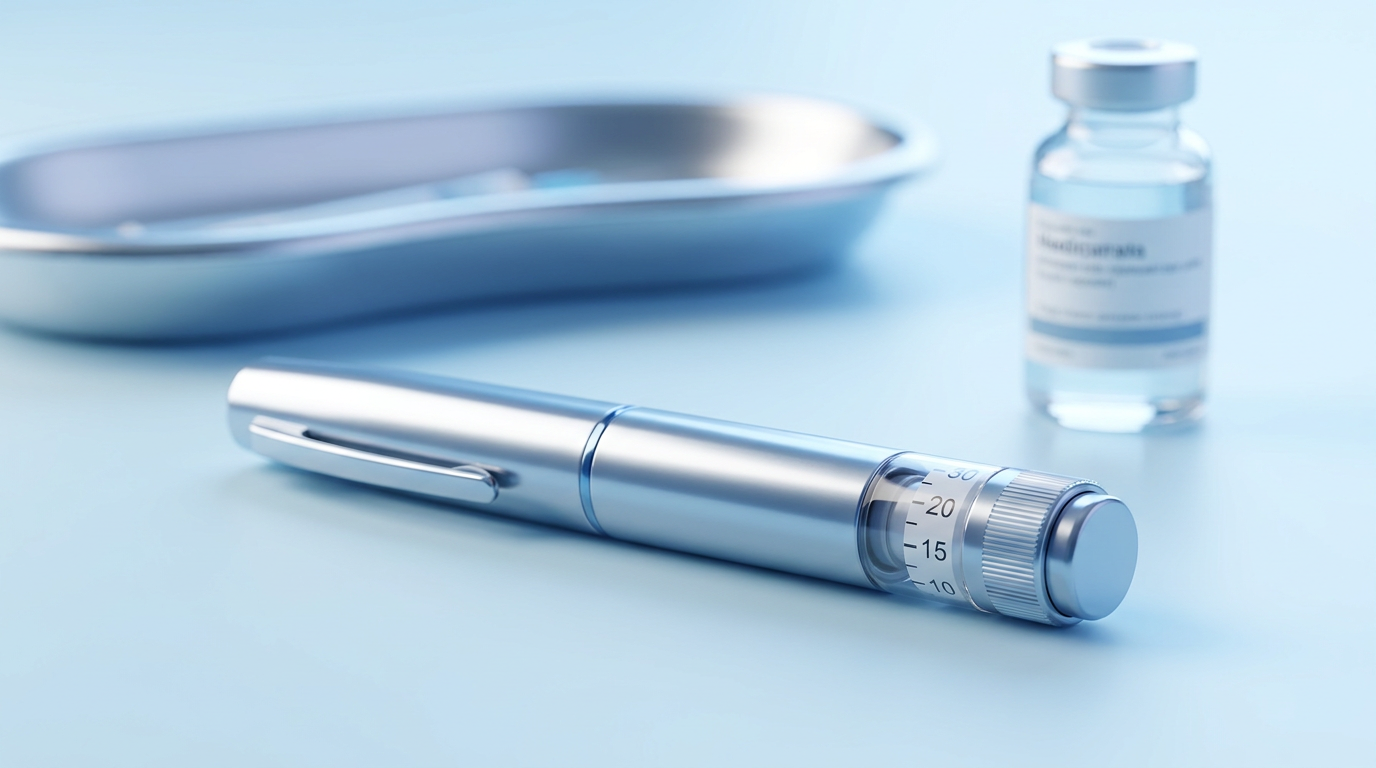
Three errors account for most of what goes wrong: drawing a partial dose from a device built for a larger fixed amount, reading insulin syringe units as milligrams, and carrying branded figures across to a compounded vial of a different strength. Behind all three sits one labeling fact. Zepbound’s 2.5 mg dose is designated for treatment initiation and is not approved as a maintenance dose.
What the 2.5 mg step is designated to do
Zepbound is the tirzepatide product approved for two purposes: reducing excess body weight and maintaining that reduction long term in adults with obesity or adults with overweight plus at least one weight-related condition, and treating moderate to severe obstructive sleep apnea in adults with obesity. Mounjaro is the tirzepatide product approved to improve glycemic control in type 2 diabetes, in adults and in patients aged 10 and older. Same molecule, two separate labels.
Both open at 2.5 mg once weekly for four weeks. The Zepbound prescribing information then directs an increase to 5 mg weekly, with any further increases in 2.5 mg steps after at least four weeks at the current dose. Approved maintenance dosing for weight reduction is 5 mg, 10 mg, or 15 mg weekly. For sleep apnea it is 10 mg or 15 mg. The ceiling for either indication is 15 mg.
People who tolerate the first four weeks well, or who are watching what the next box costs, sometimes improvise with the hardware instead of raising the question with the prescriber. The hardware is where the injuries come from.
The presentation decides what is physically possible
| Presentation | Strength per mL | Dose per injection | What that means in practice |
|---|---|---|---|
| Single-dose pen or vial, 2.5 mg/0.5 mL | 5 mg/mL | 2.5 mg, fixed | One dose per unit, nothing to divide |
| Multi-dose vial, 10 mg/2.4 mL | 4.17 mg/mL | 2.5 mg in 0.6 mL | Four identical doses, drawn with a syringe |
| Single-patient-use KwikPen, 10 mg/2.4 mL | 4.17 mg/mL | 2.5 mg | Four fixed doses, one patient only |
| Single-dose pen or vial, 5 mg/0.5 mL | 10 mg/mL | 5 mg, fixed | Not a labeled source of two smaller injections |
| Multi-dose vial, 20 mg/2.4 mL | 8.33 mg/mL | 5 mg in 0.6 mL | Different concentration from the 10 mg vial |
| Compounded tirzepatide vial | Set by the compounding pharmacy | No approved label defines it | None of the volumes above apply |
The row that surprises people is the concentration difference. A 2.5 mg dose is 0.5 mL from a single-dose presentation and 0.6 mL from a multi-dose vial, because the two are made at different strengths. Volume is not a portable measure across containers, and a habit formed on one presentation misfires on the next.
Because the branded single-dose pen removes the partial-dose guesswork entirely, where the sealed device is bought becomes its own question. Branded stock moves through the manufacturer’s LillyDirect pharmacy and through several telehealth prescribers that publish their own cash prices, among them Henry Meds, Sesame, and HealthRX, whose Zepbound listing sets out the strengths it fills. Confirming that a program supplies the factory-sealed device, rather than a compounded vial of some other concentration, is what keeps every volume figure in the table above meaningful.
Partial doses are the mistake that defines this question
The single-dose pen and single-dose vial hold one dose each. The multi-dose vial and the KwikPen each hold four doses of one strength, and the KwikPen dispenses those four fixed amounts rather than an arbitrary volume. There is no approved method for turning a 5 mg presentation into two smaller injections, and the arithmetic that people attempt does not survive contact with a device that was never designed to be split.
The label anticipates the switching problem directly. Prescribers are told to make sure patients know which presentation they are receiving, to arrange training specific to it, and to retrain whenever the presentation changes rather than assuming technique carries over. Vial users are pointed to a syringe suited to the volume being drawn, for example a 1 mL syringe able to measure 0.5 mL or 0.6 mL, with a fresh syringe and needle every week.
Insulin syringes and the unit problem
Insulin syringes are graduated in insulin units. Those marks have no fixed relationship to a milligram of tirzepatide, and treating them as though they do is how the largest reported errors happen. A published case series of administration errors involving compounded semaglutide sent to a regional poison control center described two patients who self-administered tenfold overdoses, one who was dosing in milliliters and units rather than milligrams, and one who received a vial and syringes with no counseling attached.
A pharmacovigilance analysis of the FDA Adverse Event Reporting System found the same weakness on a larger scale. Compared with non-compounded formulations, reports involving compounded GLP-1 products carried far higher reporting odds for preparation errors, contamination, and compounding or manufacturing problems, along with higher odds of hospitalization.
Compounded tirzepatide inherits none of these numbers
Compounded tirzepatide is not FDA-approved. No agency-reviewed label fixes its concentration, its container, or its schedule, and strengths differ between pharmacies. Every milligram-to-volume figure in the table above describes a branded presentation and nothing else. Applying one of them to a compounded vial of unknown strength is the single most consequential measurement error in this category.
Which of these mistakes is even available depends on how the medication arrives. A retail pharmacy filling a branded prescription hands over a sealed device with a fixed volume. LillyDirect, the manufacturer’s own channel, ships that same branded product. Direct-to-consumer prescribers such as Ro, Hims & Hers, LifeMD, and FormBlends run on different supply arrangements and different cash prices, so the useful question before paying is what physically shows up in the box, at what strength, and who answers when the written instructions and the vial label disagree.
Handling details that get skipped
Tirzepatide solution should look clear and colorless to slightly yellow, and it is not to be used if particles or discoloration are visible. Injection is subcutaneous into the abdomen or thigh, or the back of the upper arm when another person gives it, with sites rotated each week. Ultrasound and histology work in insulin users has shown that repeated injection into one area alters skin thickness, and altered tissue absorbs less predictably.
A KwikPen is never shared between patients, even with a new needle. Timing has two rules worth memorizing: a missed injection can be given within four days, or 96 hours, and the weekly day can be moved as long as at least three days, or 72 hours, separate two injections.
None of this touches the two facts that sit above technique. Tirzepatide caused thyroid C-cell tumors in rats, human relevance is unresolved, and the drug carries a boxed warning on that basis. It is contraindicated in anyone with a personal or family history of medullary thyroid carcinoma and in anyone with multiple endocrine neoplasia syndrome type 2.
Frequently asked questions
Can a 5 mg pen be used to give a smaller injection?
No approved method exists for that. The single-dose pen delivers its full contents, and the KwikPen dispenses four preset amounts of one strength. Any change to the amount prescribed is a prescriber decision that results in a different presentation being dispensed, not a technique applied to the current one.
Why is 2.5 mg 0.5 mL in one container and 0.6 mL in another?
Because the two are formulated at different concentrations. Single-dose presentations are 2.5 mg in 0.5 mL, while the four-dose vial holds 10 mg in 2.4 mL and delivers 2.5 mg in 0.6 mL. The milligram figure is the constant, and volume changes with the container.
Does a compounded vial follow the same volumes?
There is no general answer, because concentration is set by the compounding pharmacy and no reviewed label establishes it. Instructions have to come from the prescriber and the pharmacy that filled that specific vial, tied to the strength printed on it rather than to any branded figure.
What if two injections land close together?
The labeling sets a minimum of three days between doses when the weekly day is being shifted. Closer spacing concentrates exposure over a short window, and gastrointestinal symptoms are the usual consequence. It is worth reporting rather than absorbing quietly, since the following weeks may need rearranging.