What makes fresh lobster such a memorable coastal dining experience?
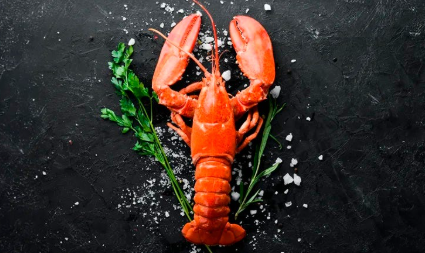
Eating lobster at a weathered timber table some three meters from the ocean is to have the most exquisite and fresh seafood experience in the world. We were sitting at a weathered timber table near the ocean, and I was commenting on something and I forgot what it was because the lobster that we had was so good. It was split and it was grilled, and it was this coral-pink color, glistening, and my friend on the other side of the table had the same expression, and we just sort of stopped talking, and picked up our crackers and started eating our lobsters.
Here’s an attempt to describe a moment in time for me whilst sitting at weathered timber tables about three meters from the ocean where I had been waiting for a short period of time for lobster split and grilled. I ‘forgot’ what I was talking about moments before the lobster arrived and my expression mirrored that of my friend sitting across from me at the table and we just ‘dropped it’ and started cracking our crackers to eat the beautiful coral-pink glistening flesh.
Freshness changes everything (and I mean everything)
This image is unappetizing to say the least. When lobsters die they start to decompose very quickly, within a few hours the meat can begin to take on the consistency of rubber. This is what lobster that has been left to die for too long starts to smell and taste like, and it’s something that is avoided by most fishermen, restaurant and chefs and end up being left over from fishing trips to be used in fish and chips etc. Because lobster spoils so quickly it is typically only left on the end of fishing trips once sufficient stock has been brought back to shore. Some chefs freeze lobsters in order to keep them for longer but once thawed lobsters continue to deteriorate at an alarming rate.
A lobster that has been pulled from the ocean hours before it’s been cooked and then expertly cooked has a firm yet yielding texture and a clean brininess and natural sweetness that’s enhanced by a slathering of butter and a dollop of heat. Lobster that has been out of the water for too long before it’s been cooked and then frozen has a rubbery texture and an unpleasantly sweet flavor with a slightly chalky mouth feel. This does not mean that all lobster that’s been frozen is bad, but it’s generally far inferior to lobster that’s been pulled from the ocean and cooked the same day.
Before I had the real deal I was puzzled by all the fuss about Lobster. I had it once before at a hotel where it was part of a buffet. It had been covered in loads of cream sauce to hide the flavor of the Lobster. It was just a pretty average dish and I could think of far better ways to spend money for a really great meal.
Why the coastal setting isn’t just atmosphere
Of course, this spot could all be romanticized but in this instance, it really makes a huge difference in the experience of dining out on lobster. Firstly, there’s the supply chain; by being at the coast you can get the lobsters from the boat to the plate in hours not days which makes a huge difference to the quality and flavor. And secondly, there’s the direct relationship that many coastal restaurants have with local fishermen. This means that the menu will change daily to reflect what’s come in that morning from the boats as opposed to what’s available from the distributors.
But for me eating seafood at the coast is also about not paying attention to anything else while I’m eating it. The ocean is right there in front of you. You’re sitting at a table or on a bench or on the sand. You’re eating food that’s been picked up from the sea right in front of you just minutes before. So you’re not paying attention to your phone. You’re not listening out for other tables. You’re not waiting for your waiter to come back. You’re not comparing yourself to the couple at the next table. You’re just eating and that is all.
Fresh seafood, from coastal locations around the world, has quietly become one of the most sought-after experiences in food tourism globally. A growing number of travelers build around local seafood and ingredients in planning and booking their trip and for Australian coastal seafood fans, finding restaurants which can serve locally caught lobsters as found at lobsters prior to booking accommodation would be wise.
The premium question
As for why lobster is so expensive to buy, the honest answer is that lobsters are rare and hard to gather and prepare for human consumption. People in the food industry are often asked by other people who eat out from time to time why things cost so much, and this is one of the most common.
- Lobsters are slow-growing and can’t be farmed at meaningful scale the way fish can
- Harvesting them requires labor-intensive trap systems and tightly regulated licensed fishing operations
- They’re highly perishable, which dramatically complicates transport and storage
- Demand consistently outpaces sustainable supply in most premium markets
The price of lobsters on menus will ultimately equal the price of lobsters in other markets where there is real scarcity driving true effort to produce and to serve lobster meals. It will not equal the price of other foods where the foods are being sold under branded packaging and imagery, and then used in very small proportions in dishes to justify excessive prices based on the packaging and imagery. A prime example of this type of pricing would be ‘truffle infused’ dishes where no actual truffles are used.
See also: How Assistive Technology Is Helping People Live More Independently
What you get for your money
| Factor | Fresh coastal lobster | Restaurant lobster (inland, non-specialist) |
| Time from catch to plate | Often same day or next day | Can be days to weeks |
| Texture | Firm, clean, yielding | Variable, sometimes rubbery |
| Flavour depth | Naturally sweet, briny, complex | Flatter, relies more on sauce |
| Overall experience | Full sensory event, tied to place | Good meal, less memorable |
The ritual nobody talks about (but everyone eventually notices)
A great lobster dish can be one of the favorite memories for anyone. A slow meal with fresh seafood and an ocean right outside your door is so rare in fast food culture today. First of all a great lobster dish demands something of you. Using your hands with tools to crack open the hard shell of the lobster, pulling out the tail and individual morsels from the claws one by one. The pace of eating lobster is slow and that in itself is what makes it so special. The individual pieces of lobster are so delicate and delicious that one really cannot hurry through a lobster meal. It is in itself an obstruction to the fast food culture of our times and can be very frustrating at times.
There is also the slow food or process of eating lobster that is so memorably ‘luxurious’. The slowness of a whole fresh lobster is, in itself, a large part of its appeal. From the moment of purchasing through to bringing home and eating the lobster, the whole process takes a long time and, for much of that time, you are engaged in slowly and physically cracking open the shell with your hands and then extracting all of the various pieces of lobster flesh from the body. Whether or not the flavor of all of the lobsters that you eat is up to scratch every time is beside the point, the other factors generally fall into place rarely enough to make eating lobsters a very special and memorable occasion.
Not every meal does that. Most don’t, honestly.