Why is bathroom independence important for ageing at home?
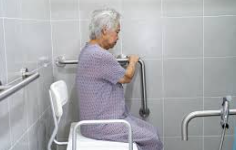
My grandmother refused to consider a care facility for years. Every time someone asked her why, she’d give a different reason. For a time it was her garden. Then it was her cat. Then it was because she knew her way around her home. Finally, it was because she had control of the bathroom.
That sounds small. It isn’t.
The bathroom is the one place where we can most be ourselves in our own home. It is our most private space and often the one where we are at our most exposed. In our homes, bathroom spaces are rapidly becoming one of the last private or totally personal areas left in the home. For many older Australians, losing control of the bathroom and their personal space can mean the loss of independence and lead to full time care for which they have never planned.
Simple Facts About Aging in Place.
Everyone imagines ‘ageing in place’ in terms of dignity, autonomy and familiarity. But how do people actually manage as they grow older? Firstly, they have to manage to get around their home, designed for a fitter younger person. Then there is the problem of avoiding slips and falls on wet surfaces, and minimizing wear and tear on joints and body when navigating narrow spaces. The physical supports needed in doorways, hallways and rooms to maintain safe mobility are not yet in place. And the person has to find a way to put them in every day.
The biggest single physical barrier to people aging in place are the bathrooms of their homes. And by far the greatest number of modifications take place in showers. The reality of most people’s daily lives is that they are at their most exposed in their own bathrooms. In order to shower, people are required to balance on wet floors, stand for long periods of time and then step up and over a shower base – often higher than people imagine. For most people in their 80s these tasks are extremely challenging and can be extremely punishing. In fact falls from height in bathrooms are one of the most serious injuries to affect older people and, as a result of these injuries, they are frequently hospitalized and end up in full-time care – the very thing that people are trying to avoid by staying in their own homes.
Modify your bathroom to remain at home longer or lose your independence sooner.
The thing nobody in these conversations actually talks about
— There’s this to say for the supporters of aged in place; the supporters of home care;
There is however something that is not often discussed at length in relation to aging and aged care, and that is the sense of fear that a person feels when they are in their home and they are worried that they may fall in the bathroom. This can be a fear that builds before a fall has even occurred. Even more so before a serious injury occurs and before hospitalization and possibly even long term care occurs. Once a person has fallen in the bathroom and required hospitalization for a serious injury, it can be a matter of days or even hours before they are transferred to long term care.
Simple modifications to the bathroom, or indeed a general assessment of the home as it relates to the person’s growing limitations, can uncover ways in which he or she can continue to be independent and safe in their own home. This in turn means that your loved one can continue to grow old in their own home without becoming a burden on their family or incurring the often very negative connotations of nursing home care. It is a problem that is far better to address before it becomes a major issue.
There are solutions for completing daily bathroom tasks safely. For homes with a shower, a walk in shower solution is typically the best. This can include a number of features, such as grab rails, non-slip surfaces and a shower chair, such as an shower chair. These types of modifications to the bathroom will help to increase independence by allowing the user to complete their daily hygiene tasks safely without assistance. The best modification is one that removes fear of completing daily tasks, allowing the person to live life as normally as possible as they age.
Privacy and what it’s actually worth
Many people are uncomfortable asking for help with personal care tasks because they feel they are intruding on the person’s space. The bathroom is generally the most private room in the home and people want it to remain private even when they are no longer able to manage to care for themselves. Often there is a fear of losing privacy and this can be very distressing for some people. When planning for support in the home it is essential that consideration is given to the person’s need for privacy and that wherever possible this can be maintained.
Another important consideration for people of all ages is the ability to maintain privacy when transferring from the shower to the toilet. While showering is often considered to be a private activity that people of all ages engage in on a daily basis, for many older people this activity takes place in the presence of another, either family or paid carer. For many older people this aspect of their life is very important to them and they are keen to maintain as much control as possible over this aspect of their life. They are often reluctant to give up this aspect of their life, even if modifications to the bathroom could enable them to transfer from the shower to the toilet safely while still maintaining some privacy.
What actually makes a bathroom safer
Not every house or situation is the same. But there are some common modifications that are used to create age-friendly bathrooms. The following are grouped into several categories:
- Surface grip: non-slip mats inside and outside the shower, textured floor treatments that don’t look institutional
- Support structures: grab rails near the toilet and at the shower entry, a fold-down or freestanding shower seat for stability and rest
- Access: removing shower lips or ledges entirely, widening doorways for anyone using a walker or wheelchair
- Visibility: better lighting throughout, particularly around the vanity and the shower area at night when disorientation is highest
Worth thinking through before starting any project:
| Modification | Approximate cost | DIY-friendly? | Impact on independence |
| Non-slip mat | Low | Yes | Moderate |
| Grab rail installation | Low to medium | Sometimes | High |
| Shower chair | Low to medium | Yes | High |
| Shower lip removal | Medium to high | No | Very high for mobility aid users |
(Prices for products are also extremely variable based on location. It’s worth starting with something affordable to get the ball rolling, and then to proceed with the remainder of the bathroom renovation.)
See also: Cheap eSIM for Turkey: Is MobiSIM Worth It for Budget Travelers?
Before the crisis, not after it
The majority of modifications made to bathrooms of older people are done after a fall or near miss. This is when the older person is hospitalized due to serious injuries from a fall in their home, and the discussions that should have happened years prior, regarding the older person’s independent living in their home, are brought into question quickly while the older person is recovering from their injuries in the hospital, and they are at a low point.
In looking at home modifications in a different light, it will also help to tackle this very important subject before it becomes a crisis for everyone involved. Home modifications will be viewed in a different light by older people and their families, when approached as part of normal home maintenance rather than implications of old age and inability to live in their home.
My grandmother had some slight modifications done to her bathroom such as a rail on the shower wall, a non-slip mat on the floor and a seat in the shower where she would place her towels while washing herself. She was 91 when she had to go into care, I believe she had aged in place for as long as it was safe for her to.